
Loadshedding-Free Streak Hits 133 Days as Eskom Achieves 70% Energy Availability
South Africa has now gone 133 consecutive days without loadshedding as Eskom's generation capacity continues to strengthen, with the month-to-date Energy Availability Factor (EAF) exceeding 70% for the first time since 2021.
Generation Fleet Shows Sustained Improvement
Eskom's latest performance update shows the national power utility's Energy Availability Factor fluctuating between 65% and 71%, with the month-to-date average holding at 71.15%. This key performance indicator hasn't reached these levels since 2021, signaling significant progress in Eskom's Generation Recovery Plan.
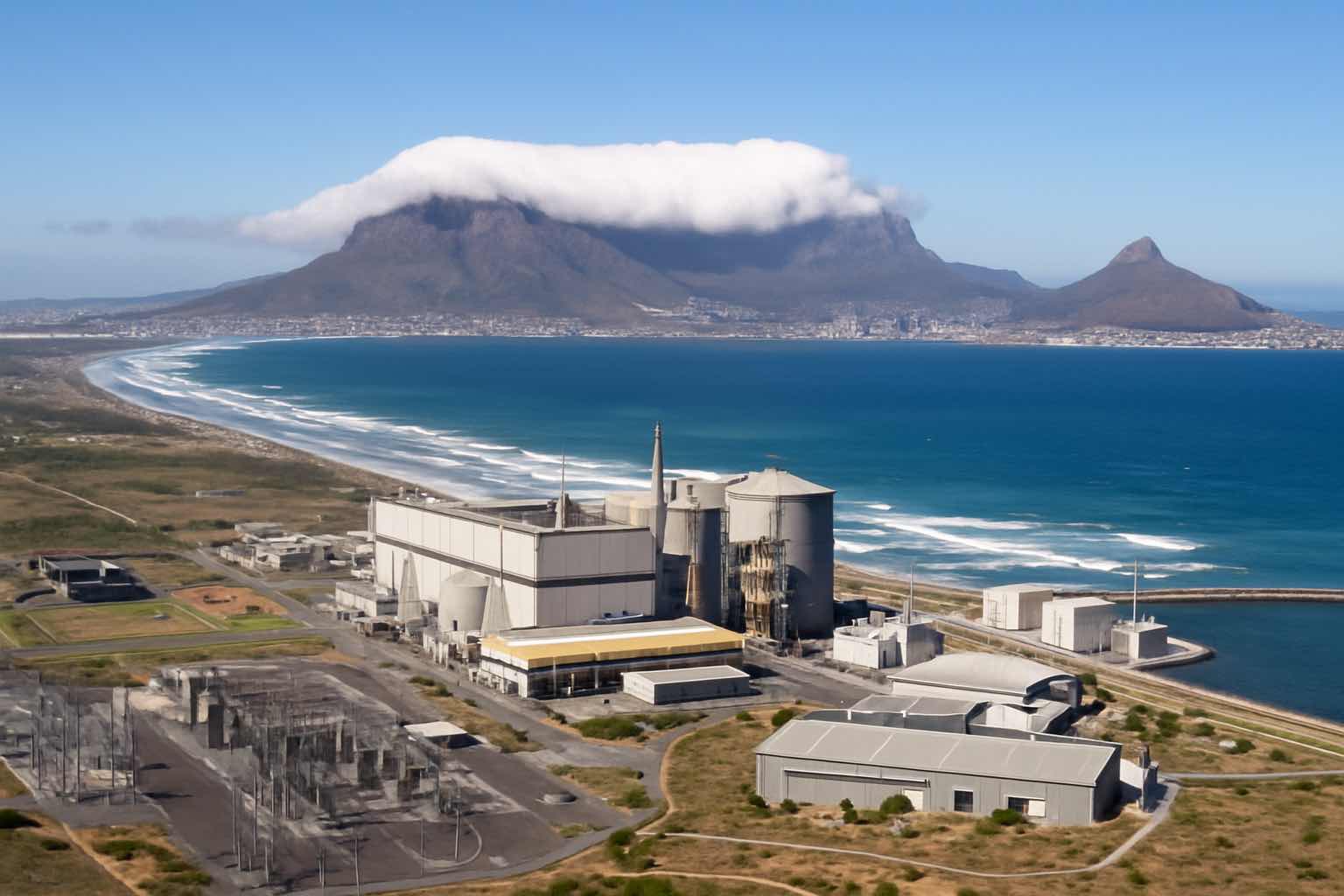
A major contributor to grid stability will soon return as Unit 1 at Koeberg Nuclear Power Station has begun its start-up sequence after completing refueling. The unit is currently in hot commissioning — the critical testing phase before full operation — and will add 930MW to the national grid once online.
Between 19-25 September, Eskom recorded an average of 9,514MW in unplanned outages, showing a substantial improvement compared to 12,660MW during the same period last year — a reduction of 3,146MW in breakdowns, equivalent to an entire power station the size of Duvha.
Additionally, Kusile Unit 6, which has been feeding power to the grid since March 2025, is expected to reach commercial operation by 30 September, further bolstering the system's capacity.
Minimal Loadshedding in 2025
The technical improvements under the Generation Recovery Plan have ensured that electricity demand has been met for over 97% of the time in the current financial year. With only 26 hours of loadshedding recorded between 1 April and 25 September 2025, South Africans have experienced the most stable power supply in years.
Eskom is planning to return an additional 2,500MW of generation capacity to service ahead of the evening peak on Monday, 29 September, and throughout the coming week, further strengthening the system.
Reduced Reliance on Diesel Generation
One of the most notable improvements has been the significant reduction in diesel usage for emergency generation. From 1 April to 25 September 2025, diesel expenditure has consistently remained below budget, reflecting decreased reliance on the Open Cycle Gas Turbines (OCGTs).
Last week, diesel spending was just R15.03 million at a load factor of 0.41%, highlighting the improved efficiency and reduced need for emergency generation. The year-to-date load factor for OCGTs has decreased to 6.89%, though this remains slightly higher than the 5.83% recorded during the same period last year.
Summer Outlook Remains Positive
In its Summer Outlook published earlier this month, Eskom forecasts no loadshedding for the period from 1 September 2025 to 31 March 2026, citing structural progress in plant performance resulting from the ongoing implementation of the Generation Recovery Plan.
However, the Unplanned Capability Loss Factor (UCLF) currently stands at 25.84%, which represents a week-on-week improvement of approximately 0.2%, but remains about 0.3% higher than the 25.52% recorded during the same period last year.
Load Reduction Remains a Challenge
Despite the improved generation capacity, Eskom continues to implement load reduction in certain high-risk areas, with reductions ranging between 529MW and 544MW from April to June 2025. These reductions primarily target areas with high rates of illegal connections and meter tampering that threaten network stability.
Eskom has committed to eliminating load reduction within the next 12-18 months by addressing 640,000 illegal connections, upgrading infrastructure, curbing illegal electricity vending, and expanding access to free basic electricity in priority areas.
Outlook: Maintaining Momentum
While the current performance metrics show significant improvement, Eskom's year-to-date EAF stands at 62.50% (excluding Kusile Unit 6), which is still below the 63.25% recorded during the same period last year. This suggests that while short-term performance has improved dramatically, the utility still faces challenges in maintaining consistent performance across its entire fleet.
With planned maintenance currently averaging 5,233MW (11.16% of total capacity), Eskom appears to be balancing immediate supply needs with the essential maintenance required for long-term reliability. The return of Koeberg Unit 1 and the commercial operation of Kusile Unit 6 will provide additional breathing room for the system heading into the summer months.
Key Terms Explained
Energy Availability Factor (EAF): The percentage of maximum energy generation that a plant is capable of producing over a specific period, accounting for both planned and unplanned outages. A higher percentage (closer to 100%) indicates better plant performance. The target of 70% means approximately 70% of Eskom's total theoretical generation capacity is available for use.
Unplanned Capability Loss Factor (UCLF): The percentage of a plant's generation capacity that is unavailable due to unplanned events or breakdowns. Lower percentages indicate better reliability. Eskom's current 25.84% means roughly a quarter of its generation capacity is offline due to unexpected issues.
Open Cycle Gas Turbines (OCGTs): Emergency power generation units that run on diesel fuel. They're expensive to operate but can be started quickly during periods of high demand or system constraints. Eskom uses these as a last resort to prevent loadshedding.
Load Reduction: A targeted power cut in specific areas where illegal connections or overloading threatens to damage the local distribution network. Unlike loadshedding, which is implemented nationally to balance supply and demand, load reduction protects infrastructure in high-risk areas.
Generation Recovery Plan: Eskom's comprehensive strategy to improve power plant performance through better maintenance practices, operational changes, and technical interventions aimed at reducing breakdowns and increasing availability.
Hot Commissioning: The testing phase after maintenance where a power generation unit is started up and tested under operating conditions before being synchronized to the grid and returning to commercial operation.
Commercial Operation: The status when a power generation unit is fully operational, reliable, and officially contributing to the grid after completing all necessary testing and commissioning phases.


 Click here to join our telegram channel and stay up to date with load shedding and related news!