
Eskom Board Transition Marks Three-Year Recovery Journey as Power Supply Stabilizes
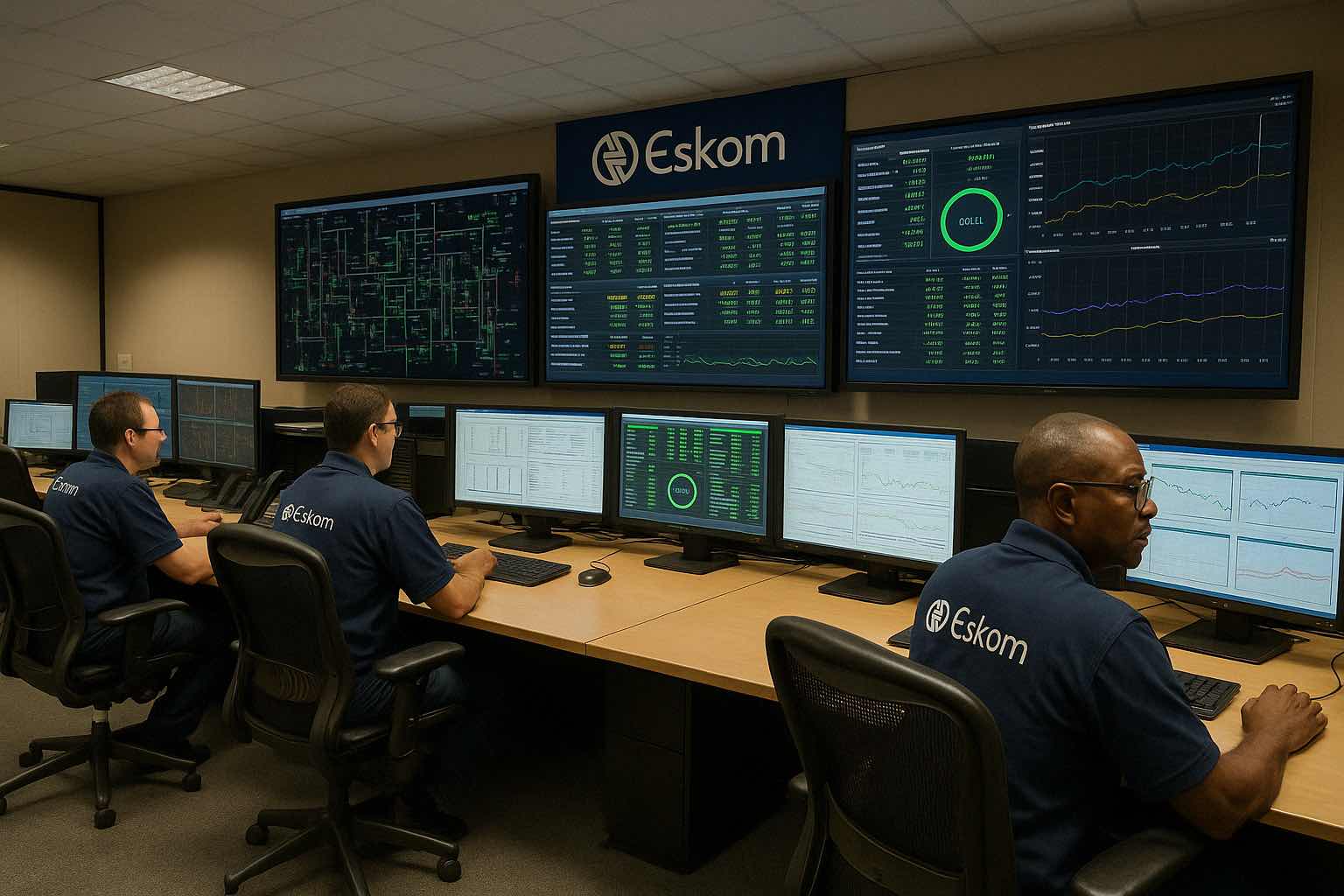
Outgoing Eskom Board Delivers Financial Turnaround and Operational Recovery
The Eskom Board appointed in October 2022 concluded its three-year term today, marking the end of a period that saw South Africa's power utility transform from a crisis-stricken organization to one achieving 98% electricity supply reliability and returning to profitability for the first time in eight years.
Under the leadership of Chairman Mteto Nyati, who will remain in his position until October 2026, the Board oversaw critical improvements in Eskom's financial and operational performance during what was described as "one of the most challenging periods in the utility's history."
Financial Recovery and Cost Discipline
The most striking indicator of Eskom's turnaround is its return to profitability. The utility reported a profit after tax of R16 billion for the year ending March 2025, a dramatic improvement from the R23.9 billion loss recorded in March 2023.
This financial recovery was supported by the launch of the Cost Optimisation and Revenue Enhancement (CORE) programme, projected to deliver R112 billion in efficiencies over five years through revenue growth, procurement savings, and operational improvements.
A significant achievement has been the reduction in Open-Cycle Gas Turbine (OCGT) expenditure – the costly diesel generators previously used extensively during loadshedding. OCGT costs fell from R30 billion in 2023 to a projected R8.5 billion by 2026, demonstrating more efficient operations and reduced emergency generation needs.
Generation Recovery and End of Loadshedding
The Board's Generation Recovery Plan implemented in March 2023 has yielded substantial results. Eskom now delivers 98% electricity supply reliability year to date – a remarkable improvement from just 9% in 2022/2023 when loadshedding was at its peak.
The Energy Availability Factor (EAF) – the percentage of Eskom's generation capacity that is available – now stands at 63.51%, an 8.02% improvement compared to October 2022. The Board had set a target of achieving a 70% instantaneous EAF by March 2025, which was reached on July 31, 2025, and has been achieved 39 times this financial year.
Perhaps most significantly, Eskom's recovery programme restored an average of 7,800MW of previously unavailable capacity – equivalent to approximately seven stages of loadshedding – by returning to service units that were once considered beyond recovery.
Credit Rating Improvements
The utility's improved performance has translated to multiple positive credit rating upgrades since October 2022. In November 2025, S&P Global Ratings upgraded South Africa's sovereign credit rating for the first time in almost two decades, citing reduced fiscal risks including the improved financial position of Eskom.
Governance and Leadership Changes
Eskom reports closing around 90% of external audit findings from FY2021 to FY2024, with verification pending. The Board's focus on stronger internal controls has helped reduce crime, fraud, and corruption, including vending fraud from the outdated Online Vending System (OVS).
As the current Board concludes its term, seven new members will join the Eskom Board, while four current members have been reapproved for reappointment. Group Chief Executive Dan Marokane and Chief Financial Officer Calib Cassim will remain in their roles.
Outlook for Eskom's Future
The outgoing Board leaves Eskom in a significantly stronger position than in late 2022, when South Africans were experiencing the worst loadshedding in history. The utility appears to be maintaining the operational stability that has allowed for the sustained suspension of loadshedding.
However, challenges remain as Eskom continues its transformation into what it describes as "a sustainable, investable company, ready to compete in a liberalised and competitive energy market." The incoming Board will need to maintain the momentum of recovery while navigating the ongoing structural reforms in South Africa's energy sector.
With NERSA's future single-digit tariff increases framework, Eskom will need to continue focusing on operational efficiencies and cost discipline to maintain financial sustainability while keeping electricity affordable.
Key Terms Explained
Energy Availability Factor (EAF): The percentage of Eskom's total generation capacity that is available for use. Higher percentages indicate more power stations are operational and available to produce electricity.
Open-Cycle Gas Turbines (OCGTs): Diesel-powered generators used during periods of high demand or when other power stations are unavailable. They are expensive to run, costing significantly more than coal or nuclear generation.
Unplanned Capacity Loss Factor (UCLF): The percentage of generation capacity lost due to unexpected breakdowns or failures. Lower percentages indicate fewer unexpected outages.
Megawatt (MW): A unit of power. For context, 1,000MW can power approximately 650,000 homes. The 7,800MW restored by Eskom could power roughly 5 million South African households.
NERSA: The National Energy Regulator of South Africa, responsible for regulating electricity prices and approving Eskom's tariff applications.


 Click here to join our telegram channel and stay up to date with load shedding and related news!