
Eskom Reports R24.3 Billion Profit as Operations Stabilize, No Loadshedding Since May 2025
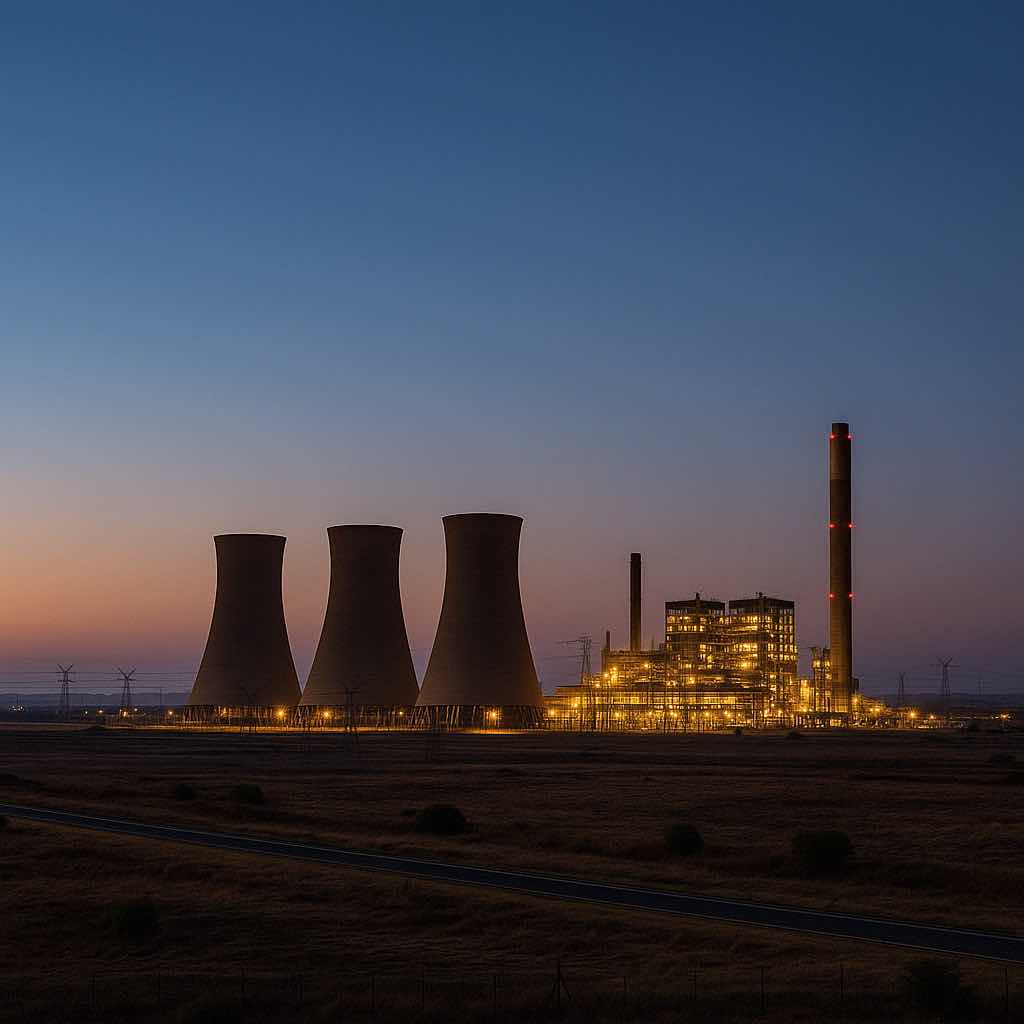
Eskom has announced a significant improvement in its financial performance for the first six months of its 2026 financial year, with profit after tax increasing by 37% to R24.3 billion compared to the same period last year. The power utility also reported minimal loadshedding, with no power cuts implemented since mid-May 2025.
Financial Performance Highlights
According to Eskom's unaudited interim financial statements released on Friday, the group recorded:
- Profit before tax: R32.5 billion (up 41% from R23 billion in September 2024)
- Profit after tax: R24.3 billion (up 37% from R17.8 billion)
- EBITDA (Earnings Before Interest, Tax, Depreciation and Amortization): R68.5 billion (up 11% from R61.7 billion)
- Revenue: R191.3 billion (up 4% from R183.7 billion)
The revenue growth was primarily driven by a 12.74% regulatory standard tariff increase implemented on 1 April 2025, though this was partially offset by a 3% reduction in sales volumes.
Loadshedding Status
In a significant improvement from previous years, Eskom implemented loadshedding for just 26 hours in total during evening peaks on only four days, with an estimated 36GWh of electricity lost. The utility confirmed no loadshedding has been implemented since 15 May 2025, extending South Africa's period without national power cuts to over six months.
Generation Capacity Improvements
Contributing to the improved power supply situation, Eskom reported two major capacity additions during the period:
- Kusile Unit 6 (799MW of installed base-load capacity) achieved commercial operation
- Medupi Unit 4 (720MW of nominal base-load capacity) returned to service after extended repairs
These additions represent approximately 1,500MW of reliable baseload power added to the national grid.
Challenges: Municipal Debt and Electricity Theft
Despite the positive financial results, Eskom continues to face significant challenges:
Municipal Debt: Despite 71 municipalities participating in the debt relief programme, municipal arrear debt has increased to R105 billion by 30 September 2025. Over 85% of these municipalities are failing to settle their current accounts on time.
Electricity Theft: Non-technical losses (theft through illegal connections, meter tampering, and illegal prepaid electricity tokens) remain substantial at approximately 7.9TWh, representing about 8% of sales volumes and translating to R17.5 billion in lost revenue.
Intervention Strategies
Eskom and the government are implementing several measures to address ongoing challenges:
Municipal Debt Management: As announced in the recent Medium-Term Budget Policy Statement, defaulting municipalities will transition to Eskom's Distribution Agency Agreements (DAAs), where Eskom will temporarily operate municipal electricity services, assist with collections, provide skilled capacity, and support initiatives to reduce energy losses.
Load Reduction Management: Eskom aims to eliminate localized load reduction by March 2027 through the deployment of smart meters for advanced monitoring and distributed energy resources such as microgrids. These initiatives will target approximately 1.69 million customers in Gauteng, Limpopo, Mpumalanga, and KwaZulu-Natal.
Future Outlook
Looking ahead, Eskom expects financial pressure in the second half of the financial year due to seasonal factors. Despite this, the utility projects that its profit after tax for the full 2026 financial year will be similar to last year's R16 billion, with an improved cash position.
Eskom has outlined capital expenditure requirements of R320 billion over the next five years to maintain critical infrastructure and expand the transmission network. This expansion is designed to accommodate projected growth in electricity generation capacity from 66GW in 2024 to 107GW by 2034, facilitating the integration of renewable energy into the grid.
The utility is also engaging with NERSA and other stakeholders to establish a predictable long-term tariff path that balances customer affordability with Eskom's financial sustainability.
Key Terms Explained
EBITDA (Earnings Before Interest, Tax, Depreciation and Amortization): A measure of a company's overall financial performance, showing earnings before accounting for financial deductions. It's often used to evaluate a company's operational profitability.
MW (Megawatt): A unit of power equal to one million watts. For context, 1MW can power approximately 650 average South African homes.
GWh (Gigawatt-hour): A unit of energy representing one million kilowatt-hours. The 36GWh lost during loadshedding episodes could have powered roughly 3.6 million households for a day.
TWh (Terawatt-hour): A unit of energy equal to one billion kilowatt-hours. Eskom's reported 7.9TWh of non-technical losses represents enough electricity to power nearly 800,000 homes for an entire year.
Base-load capacity: The minimum amount of power that a utility must generate to meet fundamental, continuous demand, typically provided by reliable generation sources like coal or nuclear plants.
Non-technical losses: Electricity losses not caused by physical or technical issues but by human factors such as theft, meter tampering, and billing errors.
Load reduction: A targeted power management technique where electricity is cut to specific areas experiencing overloading due to illegal connections, distinct from nationwide loadshedding.


 Click here to join our telegram channel and stay up to date with load shedding and related news!